
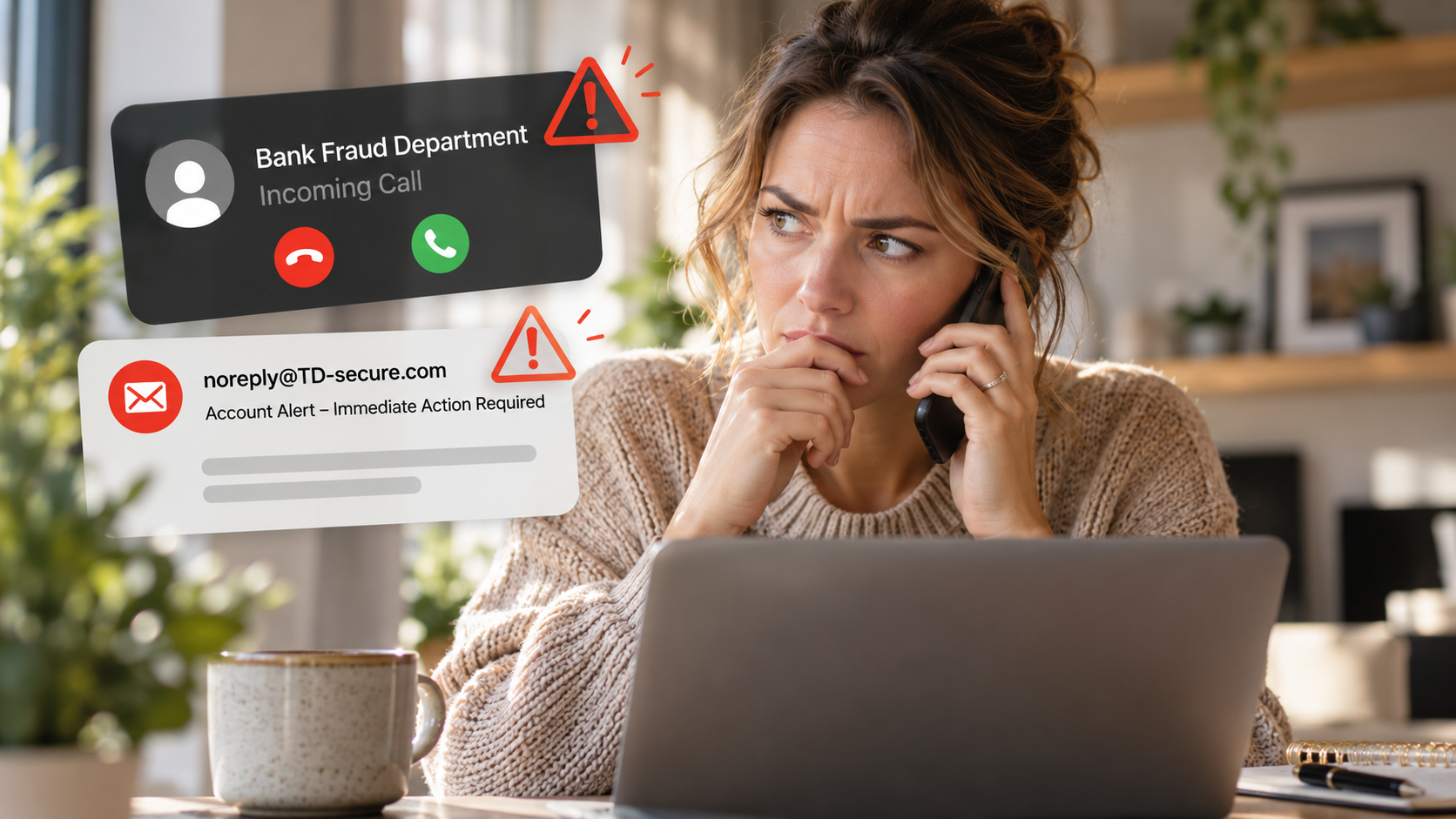
Two close encounters with financial fraud reminded me that even when you know what to look for, it's surprisingly easy to be caught off guard.
Even working in finance every day, I nearly fell victim to fraud twice in two weeks.
I spend a significant amount of time helping clients understand their finances, protect their information, and make informed decisions. I'd like to think I'm fairly good at recognizing when something doesn't seem right.
But these recent experiences were a reminder of just how sophisticated fraudsters have become. And how easily any of us can be caught off guard.
I'm sharing what happened because if someone who works in finance every day can nearly be deceived, anyone can.
It Started With a $2,500 Ticket Purchase
Last week, my business credit card was compromised, and someone attempted to process a transaction for more than $2,500 in event tickets.
Is Taylor Swift going on tour again? Because apparently someone thought I needed tickets!
Thankfully, the transaction was flagged, and my bank contacted me.
I received a verification text message and confirmed some information over the phone. Everything appeared legitimate, and in this instance, it actually was.
However, reflecting on the experience afterward, I realized I should have ended the call and contacted the bank independently through my banking app before confirming anything.
I subsequently called the fraud department myself to verify the original interaction. They confirmed it was legitimate, and my compromised card was cancelled and replaced.
Of course, that meant updating all my pre-authorized payments and subscriptions. On the bright side, it gave me an opportunity to review those recurring expenses and cancel a few things I no longer needed.
A small silver lining!
Then, Just Days Later, It Happened Again
This time, the call appeared to be coming from my bank's fraud prevention department regarding my personal accounts.
The caller explained that an electronic transfer of more than $7,000 had been initiated from my account and that immediate action was required.
Naturally, that got my attention.
What made this particular attempt so convincing was that the incoming number matched my bank's legitimate fraud department number.
I actually looked it up while I was speaking with the person.
The caller sounded professional, understood how to create urgency, and followed what initially seemed like a familiar verification process.
And the timing? Well, I'd just dealt with legitimate fraud on my business account the previous week.
It all seemed plausible.
I nearly believed them.
But something didn't feel quite right.
I asked the caller to send me a verification code by text message. Instead, he went silent and said he'd be right back.
Shortly afterward, I received an email that appeared to be from my bank.
It had familiar branding and logos, but the sender's address was suspicious. It ended in something resembling "noreply@TD" without a legitimate domain.
The email was also in French, and the details simply weren't adding up.
That was enough for me.
I ended the call and contacted my bank's fraud department directly using the contact information in my banking app.
They confirmed that nobody from the bank had called me that day.
The entire interaction had been fraudulent.
The Part That Concerned Me Most
It wasn't just the attempted theft.
It was how convincing the whole experience had been.
The phone number matched. The explanation sounded reasonable. The caller was professional. And because I'd experienced legitimate fraud just days earlier, the situation felt entirely believable.
That's what makes these scams so concerning.
We often imagine fraud attempts as obvious spelling mistakes, strange emails, or questionable messages from unfamiliar numbers.
But that's not always what they look like anymore.
A convincing caller doesn't have to know everything about you to create doubt or urgency. Sometimes they only need enough information to make you question your own instincts.
Six Things Worth Remembering About Financial Fraud
1. Don't trust a phone number simply because it looks legitimate.
Fraudsters can spoof phone numbers, making a call appear to originate from your financial institution even when it doesn't.
2. Hang up and contact your bank independently.
If someone calls about suspicious account activity, you don't need to resolve everything during that conversation. End the call and contact your bank using the number on the back of your card or through your banking app.
3. Never share verification codes with someone who calls you.
Even if a verification code arrives through a legitimate-looking text message, that doesn't make the caller trustworthy. Only enter codes through a secure process you've initiated yourself.
4. Be cautious when someone creates urgency.
Fraudsters often use fear to encourage immediate decisions. You may be told that a large transfer is underway or that your money is at risk unless you act right away.
Take a moment. Verify the situation through an independent channel.
5. Use strong passwords and additional account security.
Unique passwords, multi-factor authentication, and secure banking alerts can all help reduce your risk. If you suspect your information has been compromised, contact your financial institution and update the relevant credentials through official channels.
6. Review your accounts regularly.
Look through transactions, recurring payments, subscriptions, and account alerts. Small unfamiliar charges can sometimes be an early warning that something isn't right.
My Biggest Takeaway?
You can know what to look for and still come incredibly close to being deceived.
I work in finance. I understand the importance of protecting personal information. I regularly encourage clients to be vigilant.
And yet, I found myself in a conversation with someone who was attempting to defraud me, and for a moment, I nearly believed them.
To be clear, I'm not singling out TD. They happen to be my personal and business banking institution, and their legitimate fraud prevention team helped protect my business account.
This could happen with virtually any financial institution.
I'm sharing my experience because financial well-being isn't just about building wealth, managing debt, or choosing the right mortgage.
It's also about protecting what you've worked hard to build.
We spend so much time discussing financial strategy, planning for the future, and finding opportunities to improve our circumstances. But protecting what we already have deserves just as much attention.
If you receive a suspicious call, email, or message, give yourself permission to stop the conversation.
Ask questions. Verify independently. Trust your instincts.
And remember that it's always okay to hang up and call back.
Your financial information belongs to you. Protect it.
If you ever have questions about protecting your financial information or aren't sure where to turn, our team at Cultivate + Evolve Financial is always happy to help point you toward appropriate resources.
Catherine Ellis
Cultivate + Evolve Financial
Related Posts



Your mortgage broker has recommended First National, but what should you know before signing? We explore one of Canada's largest non-bank mortgage lenders, including payment flexibility, prepayment penalties, portability, adjustable-to-fixed conversions, and online mortgage management. Discover what makes First National worth considering and which features matter most when choosing a mortgage that fits your life.